
MCW Privacy Policy 2026: How We Protect Your Details
Privacy policy documents describe what happens to your personal information from the moment you create an account. They explain which details are collected, why they are needed, how they are stored, who may see them and how long they are kept. On a platform where you share your name, phone number and payment details, those answers matter. This page walks through the privacy policy at MCW in plain English for players in Bangladesh, so you understand how your data is handled and what control you have over it.
The official policy always remains the final reference, and this summary does not replace it. Instead, it offers context and practical examples, pointing out which sections deserve the most attention and how each one affects you day to day.
Many people skip privacy pages entirely, yet the few minutes spent reading one can help you spot scams, make better choices about what you share and know exactly where to turn if you ever have a concern. Below, you will find why the policy matters, what information is collected, how your data is used and protected, your choices and data rights, and five key points to remember.
Why This Privacy Policy Matters
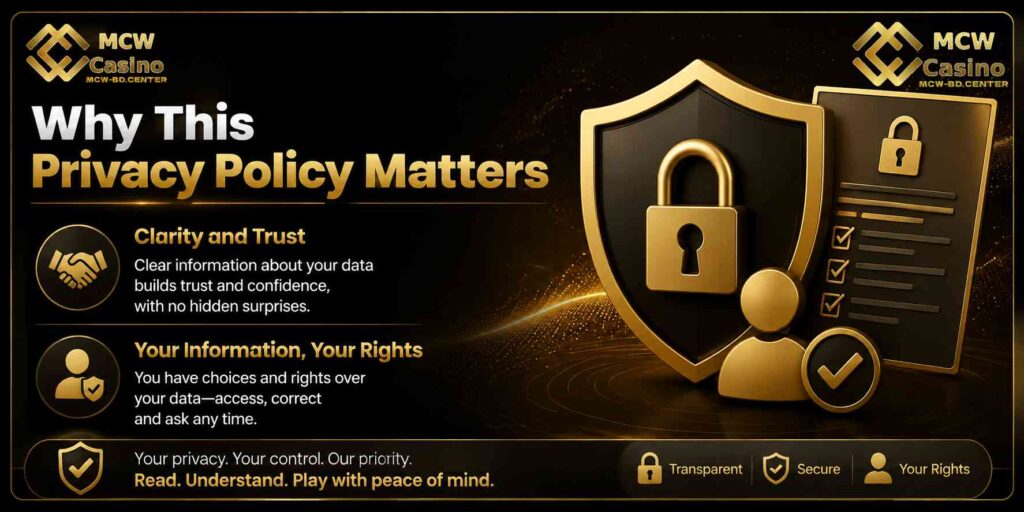
Clear rules about data protect you, build trust and help you recognise when something is wrong.
Knowing What Happens To Your Details
A well-written privacy policy answers simple questions: what information is collected, what it is used for, who it may be shared with and how long it is retained. With those answers, you can decide confidently what to provide and when.
Without them, you would have to guess. Written rules give you something concrete to check and a clear basis for asking questions if anything seems unusual. Reading the privacy policy once when you register, and again whenever the site announces an update, is enough for most players.
Transparency about data is also a good sign in general. Services that are open about how they handle information tend to be careful in other areas too, from payments to account security.
A Shield Against Misuse
Online accounts attract fraud attempts, phishing messages and identity theft. The policy describes safeguards that reduce these risks, such as encryption, restricted access for staff and secure storage.
It also sets boundaries on use. Your details should be used for clear purposes, such as running your account and processing payments, not sold or shared without good reason.
Knowing those boundaries helps you spot warning signs. If someone asks for information in a way that does not match the policy, such as requesting your password by chat, you know immediately that it is not genuine. A clear privacy policy is therefore one of your best tools against social engineering scams.
What Information Is Collected
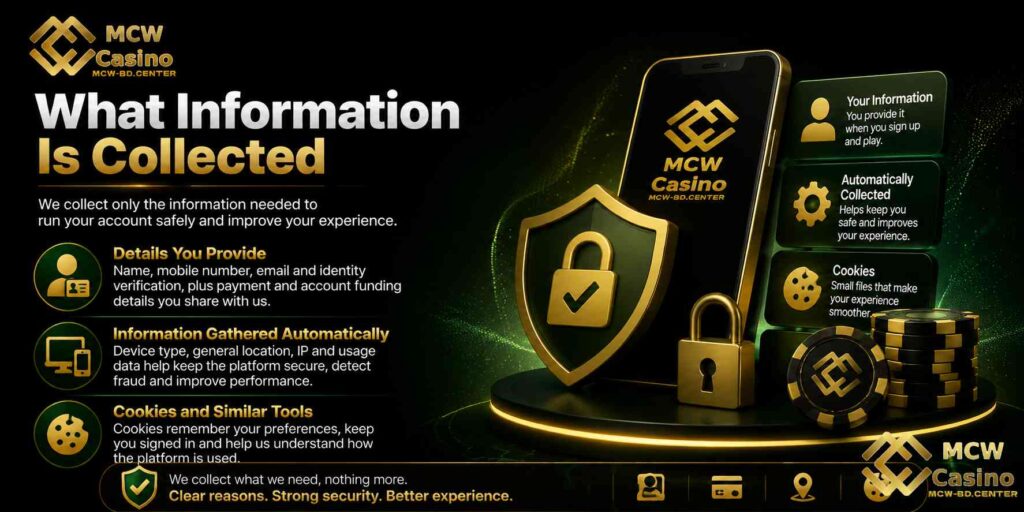
Information usually falls into three clear groups, each with its own purpose.
Identity And Contact Details
When you register, you provide details such as your name, username, mobile number, email address and date of birth. These create your account, confirm that you are an adult aged 18 or older and allow important messages to reach you.
Later, you may be asked for identity documents, typically before a first withdrawal or a large transaction. The privacy policy explains why verification is required, how documents are stored and which staff can view them.
Keeping these details accurate and up to date avoids delays and protects your account if you ever need to recover access. If your phone number or email changes, update it promptly so security codes and important notices keep reaching you. The privacy policy usually explains how such updates are verified, which protects you from someone else changing your details.
Payment And Transaction Records
Each deposit and withdrawal creates a record containing the method, amount, time and reference number. For mobile wallets such as bKash, Nagad and Rocket, the linked wallet number is usually stored as well.
Sensitive credentials such as wallet PINs should never be collected or stored. If any page or person asks you to type your wallet PIN anywhere other than inside your own wallet app, stop immediately and report it to support. Payment data travels through secure channels, and the records exist so payments can be processed correctly, fraud can be prevented and questions can be answered quickly. You can review your own transaction records at any time in your account history, which is a useful way to check that every payment matches your wallet statement.
Device, Cookie And Usage Data
Like most websites, the platform gathers technical information such as device type, browser, approximate location from your IP address and the pages you visit. Cookies keep you signed in, remember preferences and help the site run smoothly.
Under the privacy policy, usage information, such as which games you open and how long sessions last, helps improve the service and supports responsible play features like session reminders. The policy should explain which cookies are essential and how you can manage optional ones. Clearing cookies may sign you out or reset preferences, but it never affects your balance or history.
How Your Data Is Used and Protected
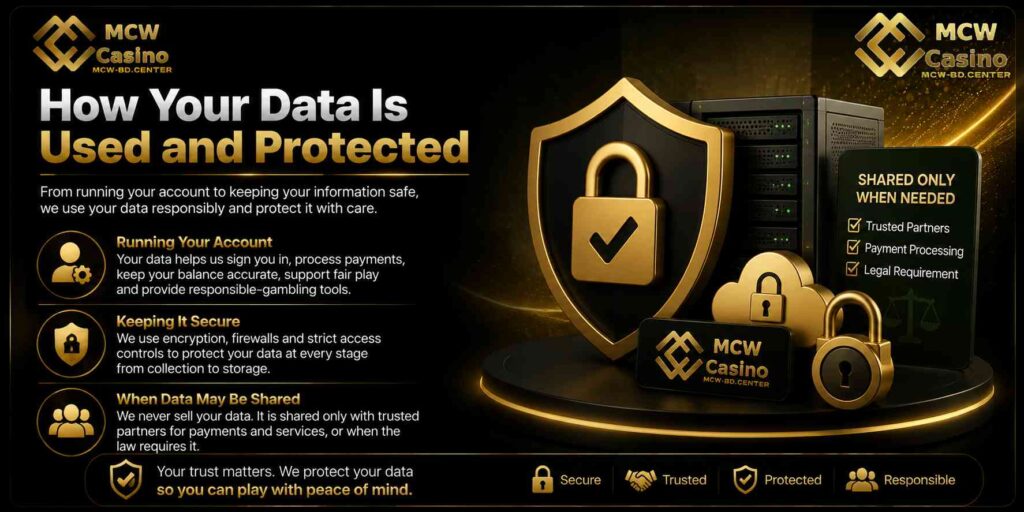
Collection is only half of the picture; use and protection matter just as much.
Clear Purposes For Each Use
Your information is used to operate your account, process payments, verify identity, provide support, prevent fraud and meet legal duties. With your consent, it may also be used to send promotional messages, which you can switch off at any time.
A responsible privacy policy lists these purposes explicitly and promises not to use data for unrelated reasons without telling you first. If the privacy policy ever changes in a way that affects how data is used, you should be notified clearly rather than discovering it later.
Limited Sharing
Data may be shared with trusted service providers, such as payment processors or verification partners, but only as far as their role requires. These partners should be bound by their own confidentiality and security obligations, and the privacy policy should name the types of partner involved.
Information may also be disclosed where the law clearly requires it, for example in response to a valid legal request. The policy should explain these situations clearly rather than leaving them vague. Under a well-written privacy policy, data is never sold to unrelated companies for advertising.
Security Measures
Strong encryption protects all data travelling between your device and the platform. Stored information sits on secured servers with restricted access, so only authorised staff can view sensitive details, and access is logged.
One-time codes, login alerts and automatic session timeouts add more layers. They work best alongside your own habits, such as a unique password, a locked phone screen and logging out on shared devices. The policy should also describe how users would be informed if a security incident ever affected their data.
Your Choices and Data Rights
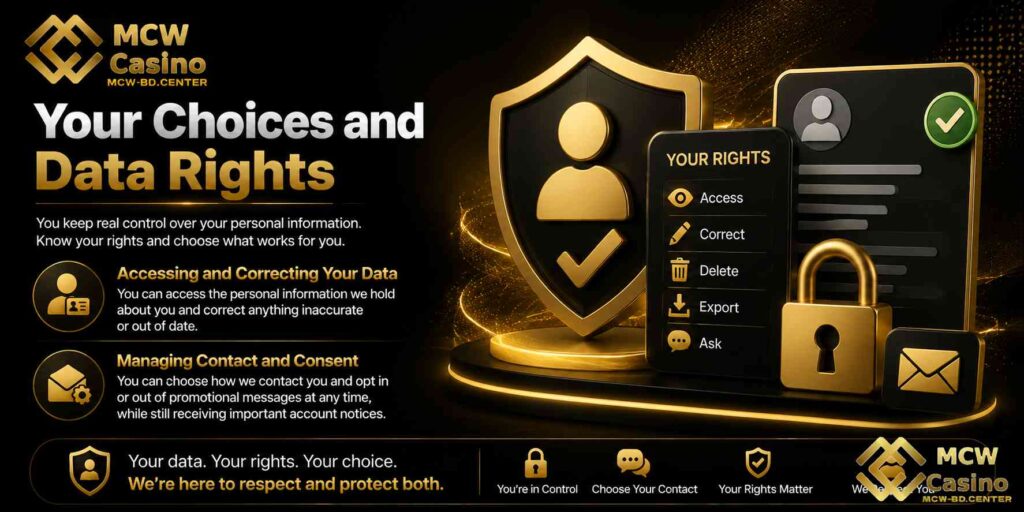
A balanced policy gives you meaningful control over your own information.
Access, Correction And Deletion
You can usually request a copy of the information held about you, ask for errors to be corrected and, once legal retention periods have passed, request deletion. The policy explains how to make these requests, normally through support, and how long a reply should take.
Keep a written record of each request, including the date and the response, so you can follow up if needed. Under a fair privacy policy, a reasonable request to see your own information should never involve a fee.
If you decide to close your account, ask support which records must be kept for legal or anti-fraud reasons and for how long. Once that period ends, data should be securely deleted or anonymised.
Marketing And Cookie Settings
Promotional emails and text messages can be switched on or off in your account settings or through the unsubscribe link in each message. Optional cookies can be managed through your browser or the consent banner, while essential cookies keep core features working.
Your choices should be remembered, so you are not asked again every time you visit. Reviewing these settings every few months is a quick way to make sure they still reflect your preferences.
5 Key Points to Remember
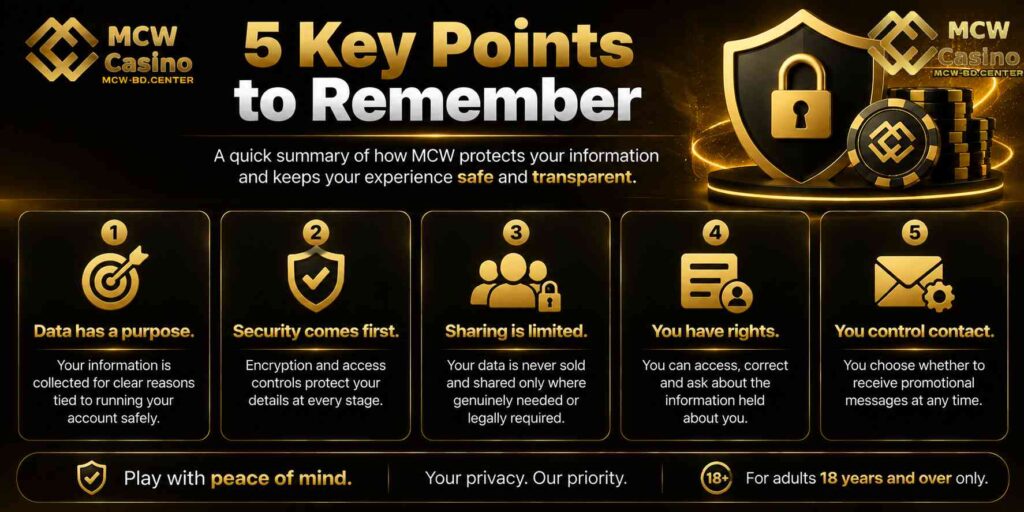
Keep these essentials in mind to protect your information everywhere you play.
- Read the privacy policy once when you join and again after any update.
- Share details only through the official site and never by chat or social media.
- Never reveal passwords, PINs or one-time codes to anyone, including people claiming to be support.
- Manage marketing and cookie preferences to match what you are comfortable with.
- Play responsibly, use only spare money and remember that play is for adults aged 18 and over.
Final Thoughts for Bangladeshi Players
Privacy policy documents explain how your information is collected, used, protected and controlled. Understanding these points helps you share only what is necessary, recognise suspicious requests and use your rights with confidence.
Before playing at MCW, read the official policy alongside this summary, set strong security habits from the first day and contact support with any question about your data. Informed players are always safer players.